How accurate is AI bird identification, really?
Manufacturer listings cite databases of 6,000 to 16,000 species. That figure describes how many species the system can theoretically classify, not how often it classifies correctly in your backyard. Published reviewer estimates for common species in good daylight place leading systems between 85 and 95 percent, and other reviews report 70 percent; the gap reflects different test methods, bird populations and conditions.
Every AI bird ID feeder performs best on a common adult bird, fully visible, well lit and with little motion blur. They struggle with fast goldfinches, juvenile house sparrows and birds landing at the frame edge. Budget for "unknown" results from day one.
Treat the AI label as a starting suggestion. Most apps let you correct a wrong label. For unusual sightings, verify with a field guide or a dedicated ID app before adding a species to your life list.
Does solar charging actually deliver?
Integrated panels are small by design, typically 2 to 5 watts in optimal conditions. Their job is to extend battery life rather than replace charging. In direct, unobstructed southern exposure for four to six hours a day, solar can significantly reduce how often you need a USB top-up; in shade, it does not.
A spot with six hours of direct sun in July may get fewer than two in December. Several cloudy days can produce a net battery loss even in a sunny location, so ask how much sun the mounting spot will get in February, not today.
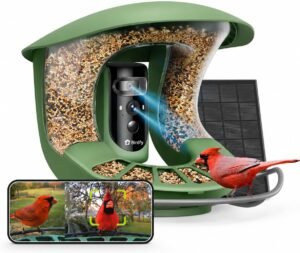
Solar-assisted should be read as fewer charges, not no charges. Lithium batteries also degrade after roughly 18 to 24 months of regular cycling, so plan for a replacement battery or new unit after two to three years. If your spot is partly shaded, prefer a larger battery or the Birdfy Lite's AC adapter.
What problems do buyers run into?
Wi-Fi pairing is the most common complaint across every brand. Most feeders need 2.4GHz Wi-Fi, and feeders 30 to 50 feet from the router often see weak signal. Check your phone's 2.4GHz signal at the mounting spot before you buy; an extender closer to the yard fixes most problems.
Verified reviews describe slow live video, delayed motion alerts and app settings that do not persist after a restart. Camera hardware generally outperforms the companion app in the first year, with firmware updates improving behavior over time, so read recent app store reviews for the model you are considering.
An IP65 rating means rain-resistant, not sealed against all water, and condensation haze appears in reviews after a season or two outdoors. Squirrels chew housings and sever solar cables, so use cable guards and mount outside easy reach. Clean lenses and clear drainage ports every week or two.
Frequently asked questions about bird feeder cameras
How long does a bird feeder with camera battery last?
It varies by model, activity and sun. A solar-assisted model in good sun can run weeks or months between charges. In shade, expect 10 to 30 days per charge for a model like the Bird Buddy Home, per manufacturer documentation. Live streaming and frequent clips drain the battery faster.
Can a bird feeder with camera identify species automatically?
Yes, every major model here includes AI bird ID. Accuracy ranges from roughly 70 to 95 percent for common species in good daylight and drops for fast birds, juveniles, edge-of-frame subjects and low light.
Do bird feeder cameras need a subscription?
It depends on the model. Most offer a free tier with limited daily AI IDs and shorter cloud storage; Bird Buddy and Birdfy sell paid plans that expand those limits, and some Birdfy Pro listings include lifetime AI. Check the specific listing before assuming a feature is permanent.
What is a wireless bird feeder camera?
It connects to your home Wi-Fi and streams to a phone app without a wired data connection. Wireless for data is separate from wire-free power (battery or solar), so confirm both before purchasing.
The right camera feeder for your yard
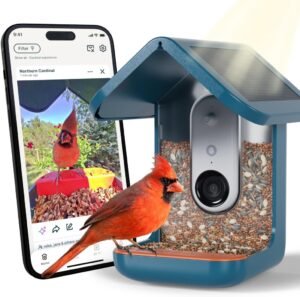
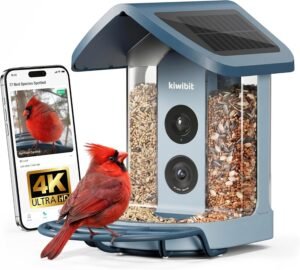
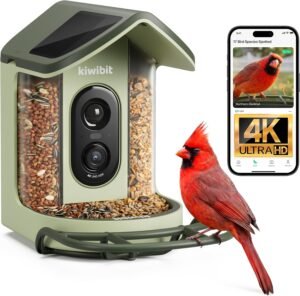
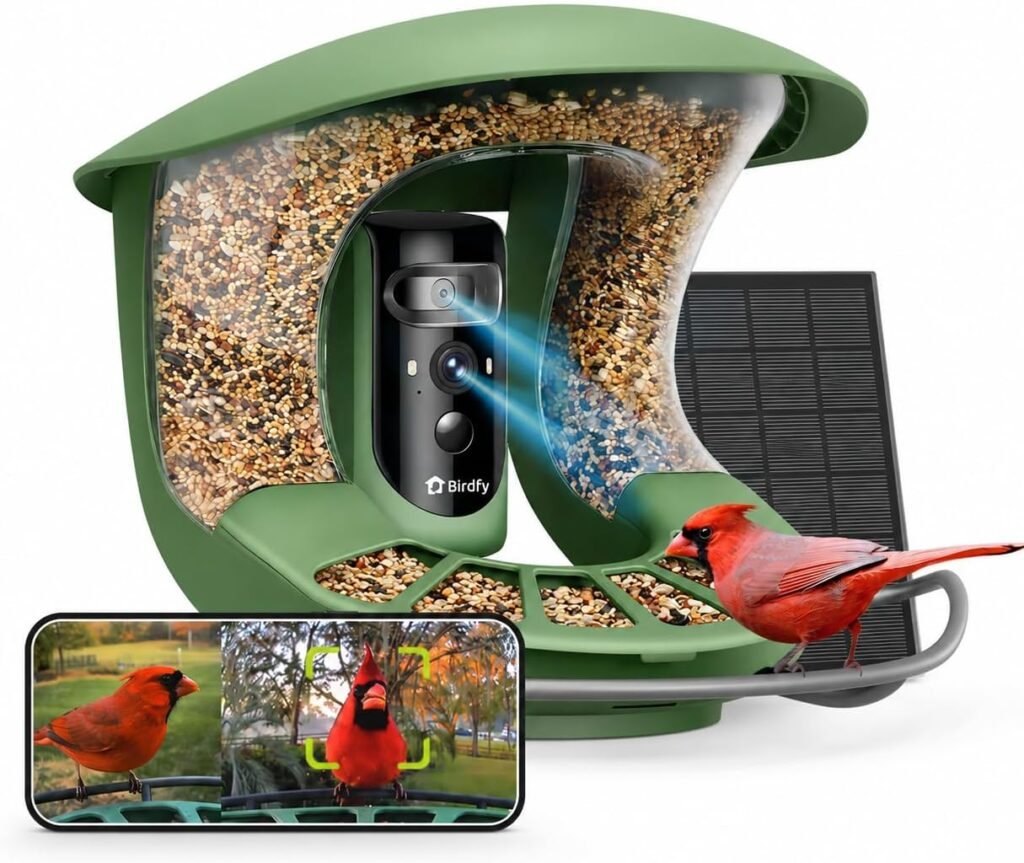
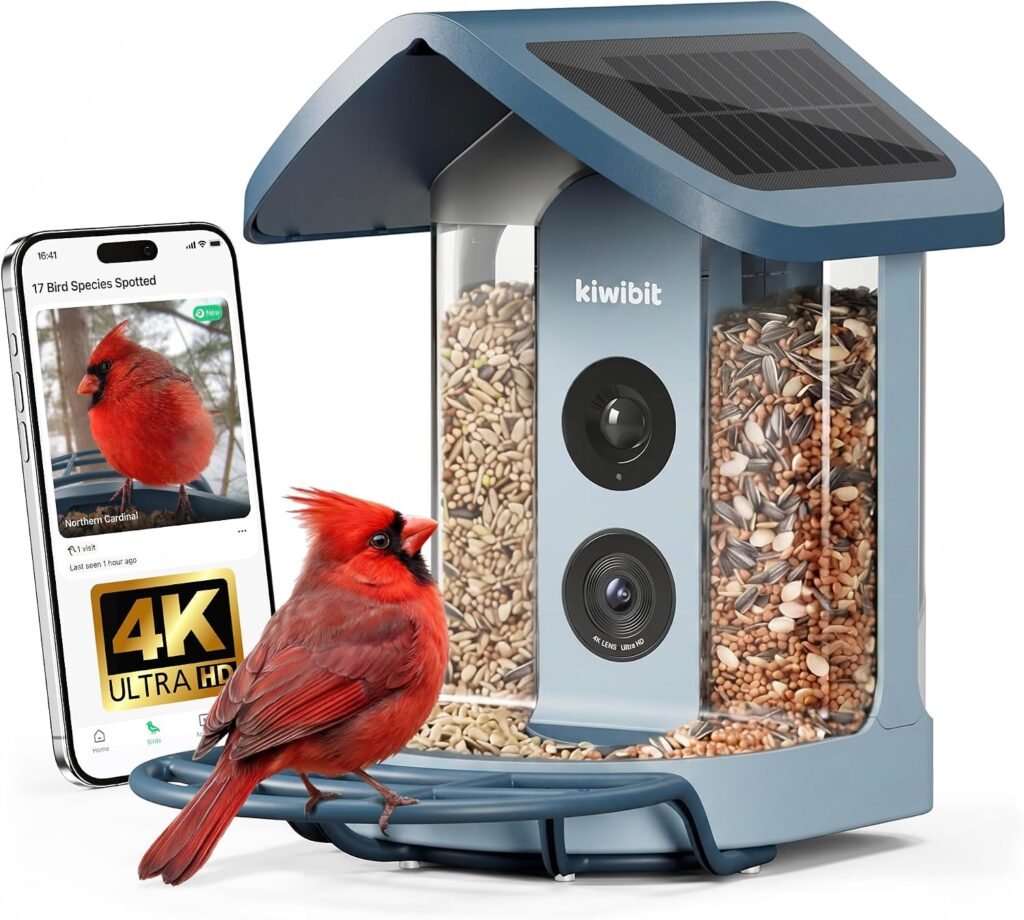
For most yards the best bird feeder with camera is the Bird Buddy Home, but confirm your sun exposure and Wi-Fi signal first. Choose the Birdfy Feeder 2 Pro for portrait photography, the Kiwibit 4K for maximum image quality, the Birdfy Lite for budget buyers who want dual-power reliability, and the Soliom BF09 or Kiwibit 2 Mini as low-risk starting points.
Before you order: check the bundle contents on the Amazon listing (solar roof, perch extender and microSD card vary), read recent app store reviews for the companion app, and confirm 2.4GHz Wi-Fi strength at the planned mounting spot. We update this guide as specs, bundles and firmware change.