
Home › How We Research
Our process
Our process
How We Research
The Bird Feeder Guide publishes research-based buying guides for backyard birders. This page explains how we choose topics, which sources we rely on, how we handle specs and prices, and what we do not do.
By The Bird Feeder Guide Editorial Team
Updated October 2026
In short: we compile guides from expert sources, we do not test products ourselves, and anything we cannot trace to a source is shown as “Not stated”. Affiliate links are explained on our Affiliate Disclosure page.
Quick Answer
We do not test products ourselves. Each guide is compiled from expert and editorial sources we have read, such as the Cornell Lab of Ornithology, Audubon, Birds & Blooms, Project FeederWatch and university extension services, and every guide lists its sources with the dates shown on those pages.
Guides are compiled with AI assistance and reviewed by our editorial team. A product appears only if an expert source recommends it, and any spec we cannot trace to a source is shown as “Not stated”.
Our five-step process
The same steps apply to every guide on the site.
1. One question per page
Each page answers one reader question, such as which feeder suits a bird or how to fix a problem. We merge overlapping topics instead of publishing near-duplicate pages.
2. Read current sources
We read several expert sources for each topic and note the date each page shows. Where a page shows no date, we say so.
3. Recommend only what experts recommend
For roundups, we list a product only if an expert source we read recommends it, and we say which source.
4. Record specs from sources
Specs come only from the sources cited. If a source does not state a spec, we write “Not stated”, and each guide shows the month its specs were verified.
5. Write, link and review
Guides are compiled with AI assistance, checked against the sources by our editorial team, and linked into related guides so readers can find them.
What we do not do
These limits apply to every guide.
We do not test products
Our guides are research-based. Each carries a note that we have not tested the products ourselves, and we never describe hands-on testing we did not do.
We do not invent numbers
We do not publish made-up prices, ratings or statistics. We usually leave prices out because they change.
We do not publish fake reviews
We do not show star ratings or customer-style reviews that we wrote. Structured data on a page matches what readers can see on it.
We do not hide affiliate links
As an Amazon Associate we earn from qualifying purchases. Affiliate links are disclosed on each page and explained on the Affiliate Disclosure page.
Limits of this guide
Corrections: if you spot an error, a broken link or an out-of-date spec, email corrections@thebirdfeederguide.com. We update the guide and the “last verified” month when we confirm a change.
Research is only as current as its sources. Manufacturers change models, and advice from experts is updated over time, so check the product listing before you buy.
Questions about our research
Do you test the feeders and products you write about?
No. Our guides are research-based and compiled from expert sources. Each guide says that we have not tested the products ourselves.
Do you use AI to write your guides?
Yes. Guides are compiled with AI assistance from cited expert sources and reviewed by our editorial team, and each guide says so in its “How this guide was made” note.
Why do some specs say “Not stated”?
Because none of the sources we read gave that detail. We would rather show a gap than guess.
How do I report a mistake?
Email corrections@thebirdfeederguide.com with the page address and what looks wrong.
Related guides
Sources and method
How this guide was made: This page was written by the editorial team with AI assistance and describes our standing process. Last reviewed October 2026.
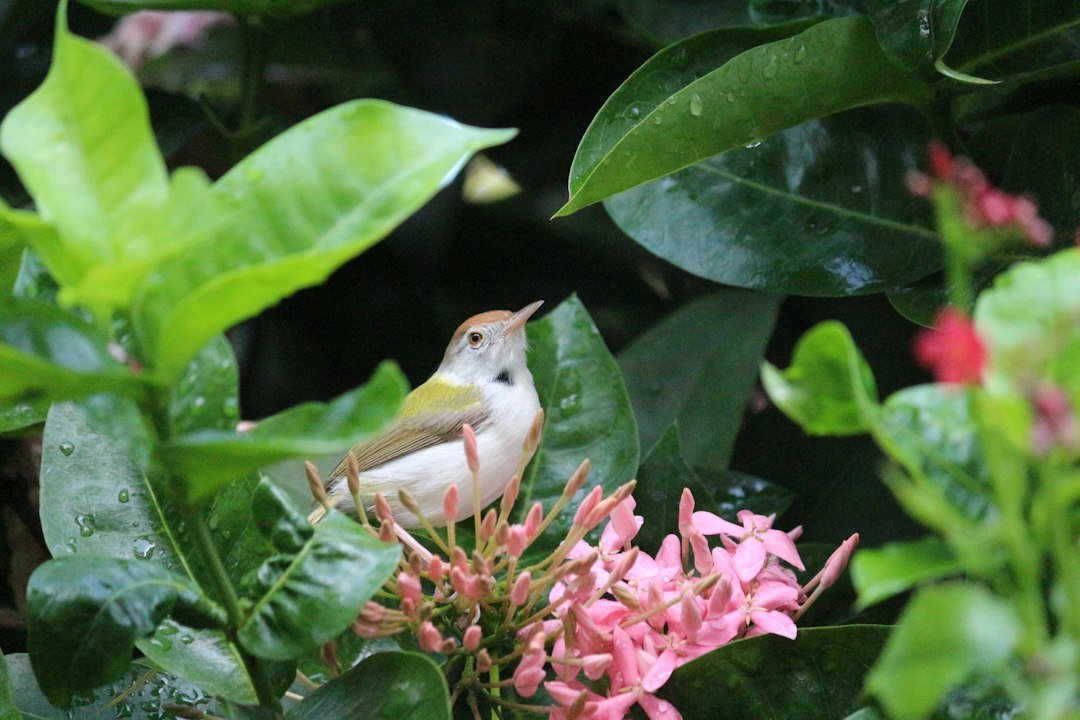
Photo: small songbird near a flowering plant by Payal Sanghavi on Unsplash. Last reviewed October 2026.