
Home › Care & Problems › Starlings and Grackles
Care & Problems · How-to
Care & Problems · How-to Guide
How to Keep Starlings and Grackles Off Feeders
Flocks of starlings and grackles can empty a feeder in minutes and crowd out smaller birds. The fix is mostly choosing feeders and food that suit small birds. This guide uses Project FeederWatch's feeder advice, plus a few products that fit it.
By The Bird Feeder Guide Editorial Team · Research-based; we have not tested these products ourselves
Updated October 2026
Disclosure: As an Amazon Associate we earn from qualifying purchases. Links below go to Amazon; we do not show prices because they change.
Quick Answer
Switch to feeders that big flocks cannot use: a suet cage open only at the bottom, tube feeders with short perches and small hoppers. Project FeederWatch says each of these tends to favor smaller birds and keep grackles and other large species from monopolizing the food.
No single change is guaranteed. If a flock persists, combine the methods below or pause feeding briefly so the flock moves on.
Four ways to keep starlings and grackles away
Start with the first two, which come straight from FeederWatch's feeder guidance.
1. Use bottom-access suet cages
FeederWatch says suet cages accessible only at the bottom tend to be starling-resistant, while woodpeckers, nuthatches and chickadees can still feed by clinging upside down.
2. Choose small hoppers and short-perch tubes
Small hoppers prevent larger species such as grackles from comfortably perching and monopolizing the feeder. Tubes with short perches accommodate finches but exclude larger birds such as grackles and jays.
3. Use feeders designed to deter large birds
FeederWatch suggests feeders that close under the weight of a large bird, feeders surrounded by wire mesh large enough only for small birds, and tube feeders with short perches and no catch basin on the bottom.
4. Avoid platform trays and ground feeding
FeederWatch says to avoid platform trays and not to spread food on the ground when larger birds are the problem. Provide suet in starling-proof feeders that allow access only from the bottom.
Products that fit these methods
Specs come from each Amazon listing. Product claims about starlings are the manufacturers' own, not independent test results.
Bottom-access suet
Birds Choice Upside Down Suet Feeder
A recycled-plastic feeder that the listing calls starling-proof. It holds one suet cake and lets birds feed from below, so woodpeckers, nuthatches and chickadees can cling upside down.
View on AmazonInverted cedar suet
Nature's Way Cedar Inverted Suet Feeder
A cedar cage with a hinged roof that holds one standard suet cake. The listing says it encourages upside-down feeding and makes it harder for larger nuisance species to reach the suet.
View on AmazonCaged tube feeder
Kingsyard Caged Tube Feeder
A metal-caged tube with a 1.5-inch by 1.5-inch mesh meant for goldfinches, chickadees and house finches. The listing says the cage makes it harder for squirrels, pigeons and starlings to feed.
View on AmazonSeed note
Seed choice will not stop a flock
FeederWatch notes that milo, common in inexpensive mixes, is not a favorite of most birds and often goes to waste. Safflower attracts cardinals and other big-billed birds, but most birds prefer sunflower. Change the feeder first; seed alone is unlikely to solve a starling problem.
Starling and grackle questions
Do upside-down suet feeders really stop starlings?
Project FeederWatch says bottom-access cages tend to be starling-resistant. Some birders report that determined starlings still learn to use them, so treat this as a strong tendency, not a guarantee.
Why are grackles on my feeder?
Large hoppers and long-perch feeders let grackles feed comfortably. FeederWatch suggests a smaller hopper to discourage them.
Should I stop feeding for a while?
Pausing for several days can encourage a flock to move on, though starlings often return to productive spots. Combine it with the feeder changes above.
Related guides
Sources and method
Feeder advice comes from Project FeederWatch. Seed suggestions reflect common feeder-expert guidance and are marked as such. Product specs were read from Amazon listings in October 2026. Corrections: corrections@thebirdfeederguide.com.
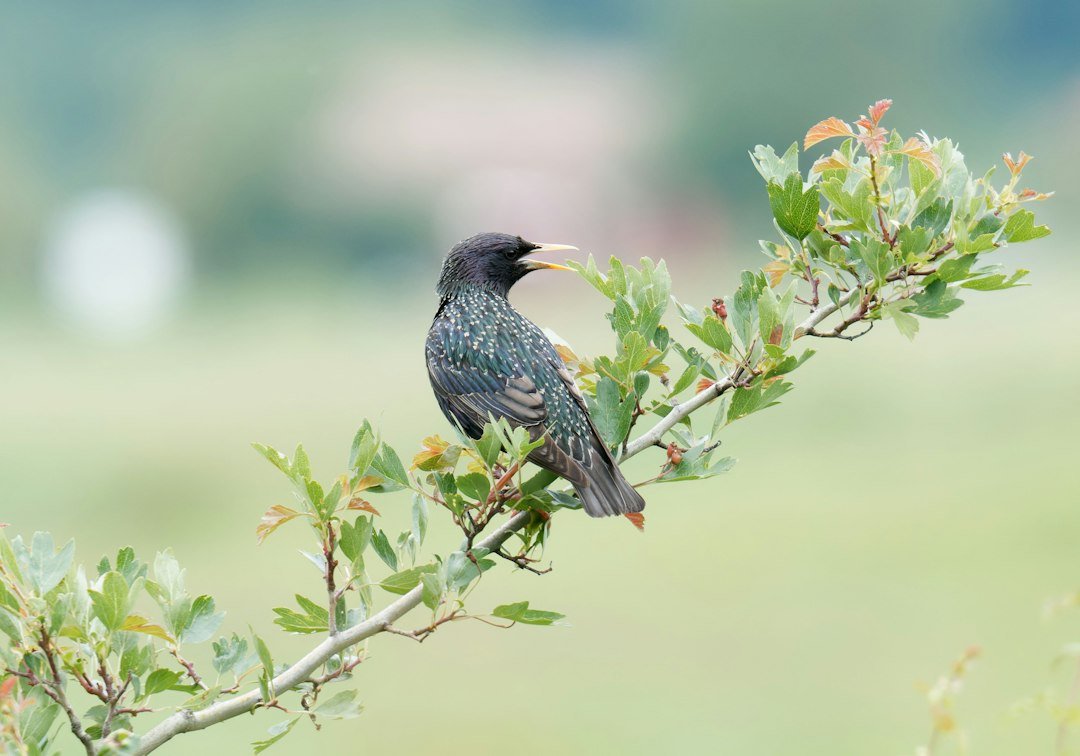
Photo: European starling by iuliu illes on Unsplash
Last verified October 2026 · Next review October 2027