
Home › Placement › Window Distance
Placement & Window Safety · Guide
Placement & Window Safety · Guide
How Far Should a Bird Feeder Be from a Window?
Closer than you might think. Cornell's All About Birds says feeders are safest placed less than 3 feet from a window, or even attached to the glass, because a bird that leaves the feeder and hits the window is not yet at full speed. This guide covers the distances, the risks in between and products that help.
By The Bird Feeder Guide Editorial Team · Research-based; we have not tested these products ourselves
Updated October 2026
Disclosure: As an Amazon Associate we earn from qualifying purchases. Links below go to Amazon; we do not show prices because they change.
Quick Answer
Put the feeder closer than 3 feet to the window, or attach it to the glass. All About Birds says this is safest because a bird that hits the window from that short distance is not traveling at top speed and has a better chance of surviving.
Some guides instead advise moving feeders 30 feet or more away. Either way, avoid the middle zone, and add decals or tape to reduce reflections.
What to do about feeders and windows
Four steps, in order of impact.
1. Move the feeder close or far
Place it closer than 3 feet to the window, or fix a window feeder to the glass. If that is not possible, some experts recommend 30 feet or more so birds have room to steer around the glass.
2. Break up reflections
Apply decals or tape on the outside of the glass. American Bird Conservancy's BirdTape instructions call for spacing no farther apart than 2 inches by 2 inches.
3. Keep cover about 10 feet away
All About Birds suggests about 10 feet from trees and shrubs as a compromise: close enough for refuge, far enough that squirrels and cats cannot easily jump to the feeder.
4. Treat reflections at feeding time
If birds still strike the glass, add screens or netting outside, or move the feeder to a window without a large reflection of trees or sky.
Products that help
Specs come from each Amazon listing. Manufacturer effectiveness claims are their own, not independent test results.
2 x 2 inch spacing
ABC BirdTape (3/4 inch x 50 ft)
A tape that reduces bird-window collisions when installed no farther apart than 2 inches by 2 inches. The listing says it lasts 4 or more years if installed correctly and does not damage glass or coatings such as Low-E.
View on AmazonMarker-style option
Feather Friendly Bird Collision Deterrent Markers
Small-scale DIY marker rolls. The listing says they were tested and approved by the American Bird Conservancy and others, last 8 or more years and withstand regular window washing.
View on AmazonReusable clings
WindowAlert Leaf Medley Decals
Five semi-transparent static-cling UV-reflective decals, each 2.5 to 3.5 inches across. The listing says the reflective material is designed to deter birds from flying into glass.
View on AmazonFeeder on the glass
Droll Yankees Observer Window Feeder
A clear plastic feeder with suction cups and a tapered overhanging roof that holds up to 2 cups of seed. Mounting a feeder directly on the glass follows the guidance to keep feeders very close to windows.
View on AmazonFeeder and window questions
Why is a feeder safer close to a window?
A bird that takes off from a feeder less than 3 feet away is not going at top speed when it reaches the glass, so it has a better chance of surviving, according to All About Birds.
How many birds do windows kill?
All About Birds cites estimates that window glass kills at least 100 million birds every year in the United States.
Is 30 feet better than 3 feet?
Guidance varies. Cornell recommends under 3 feet or on the glass. Others suggest 30 feet or more. The risky range is in between, where birds can build speed.
Related guides
More guides: Best Window Bird Feeders ·where to put a bird feeder
Sources and method
Distances come from Cornell's All About Birds; the 30-foot alternative reflects other published guidance. Product specs were read from Amazon listings in October 2026. Corrections: corrections@thebirdfeederguide.com.
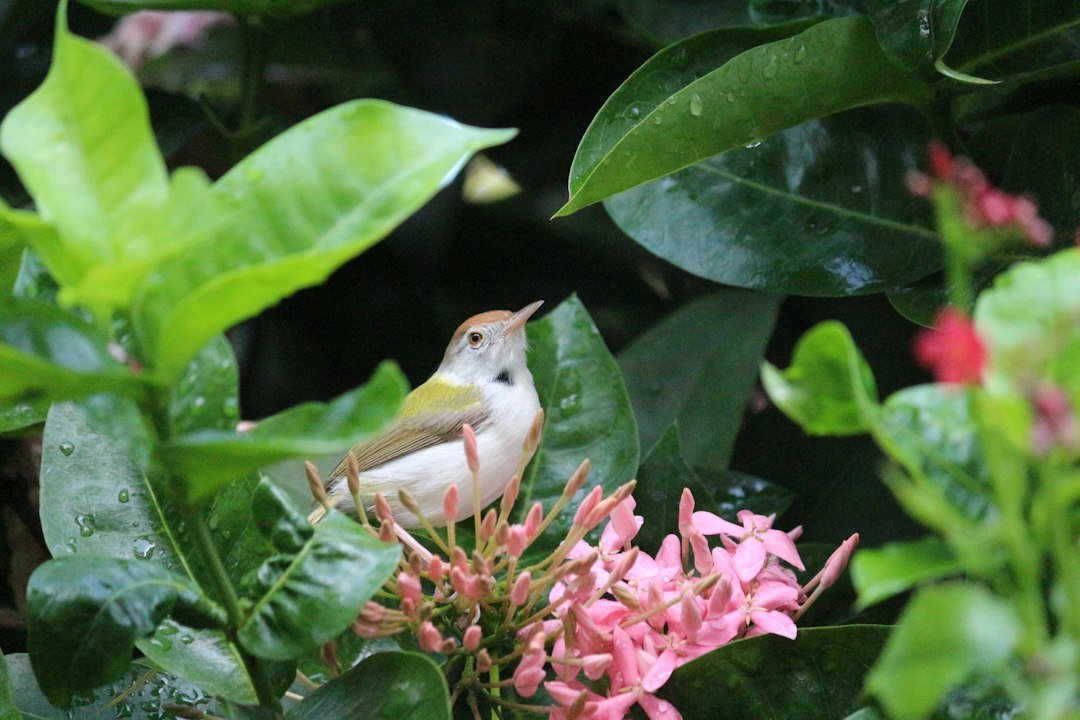
Photo: songbird in a garden by Payal Sanghavi on Unsplash
Last verified October 2026 · Next review October 2027